


Do Dog Treats Expire? Shelf Life, Signs, and What to Do About It

Dog treats expire, and the answer to whether a specific treat is still good is more nuanced than checking a date stamp on the bag. Most owners have a half-open bag of treats sitting somewhere in their house, maybe in a drawer, maybe in a cabinet, maybe in the pocket of a coat they wore twice last fall. Whether that bag is still safe to give your dog depends on several things: what the treat is made from, how it has been stored, whether the bag has been opened, and what the actual date is.
This comes up in a practical way for us at JUST CHKN because we make our treats to order. There is no warehouse shelf life to manage because each bag ships fresh after it is made. But once a bag arrives and gets opened, the clock starts in the owner's hands, and understanding what that clock actually means is worth knowing regardless of what kind of treat you are dealing with.
How Dog Treat Expiration Dates Actually Work
The date printed on a dog treat bag is almost always a best by date rather than a strict expiration date. This is a meaningful distinction. A best by date indicates when the manufacturer expects the product to be at peak quality in terms of flavor, texture, and nutrient integrity. It does not mean the treat becomes dangerous the day after that date appears, though it also does not mean you should ignore it.
Unlike human food, dog treats are not regulated under the same federal dating requirements. The FDA does not mandate expiration dates on pet treats, which means the dates you see are set by manufacturers based on their own testing and shelf life projections. Two different brands can produce chemically similar treats and put very different dates on the bag based on how conservatively they project quality decline. This is one reason the date alone is an incomplete guide to whether a treat is still good.
The more reliable indicators are the treat itself: how it looks, how it smells, and how it feels. Dates give you a starting reference point. Sensory evaluation tells you what is actually happening with the specific bag in front of you, which may have been stored differently than the manufacturer assumed when they set the date.

Shelf Life by Treat Type
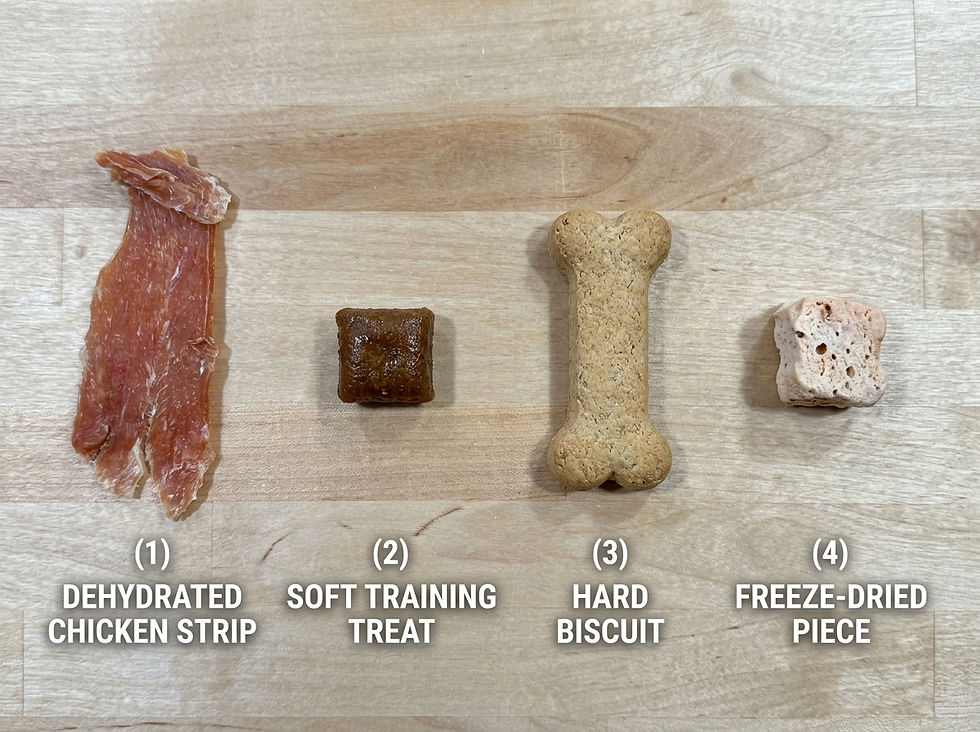
Dehydrated and Jerky-Style Treats
Dehydrated treats have one of the longest shelf lives in the treat category because moisture is the primary driver of spoilage in food products. Removing moisture to a low enough level inhibits the bacterial and mold growth that causes food to go bad. A properly dehydrated single ingredient treat, sealed in an airtight package, can remain stable and safe for twelve to twenty-four months from the production date, and sometimes longer.
Once opened, that timeline shortens. Exposure to air introduces moisture and oxygen, both of which begin degrading the product. An opened bag of dehydrated treats stored in a cool, dry place in a sealed container should remain good for four to six weeks. Left open on a counter in a warm kitchen, quality can decline noticeably within a couple of weeks. The treat will not necessarily become dangerous immediately, but it will begin losing the flavor intensity that makes it useful as a training reward and attractive to your dog. Our post on how to store dog treats to keep them fresh longer covers the specifics of storage containers, environments, and how to extend shelf life after opening.
Soft and Semi-Moist Treats
Soft treats have higher moisture content than dehydrated options, which is what gives them their texture but also what makes them more vulnerable to spoilage. Commercial soft treats compensate for this with preservatives, both artificial and natural, that extend shelf life by inhibiting microbial growth. The best by dates on soft treats are typically shorter than on dehydrated treats, often in the range of six to twelve months from production, with shorter usable windows after opening.
Soft treats that have been opened and not properly resealed can develop mold within days in a humid environment. If you are in Atlanta in the summer, you know exactly what kind of humidity we are talking about. Resealing opened soft treat bags tightly, or transferring to an airtight container, is more important with soft treats than with dehydrated ones because the consequences of inadequate storage are faster and more visible.
Baked and Biscuit Treats
Hard biscuit treats sit between dehydrated and soft treats in terms of moisture content and shelf life. They are baked to a lower moisture level than soft treats but retain more moisture than fully dehydrated products. Shelf life is typically nine to eighteen months from production, and the most common post-opening issue is staleness rather than mold, since the reduced moisture makes them less hospitable to microbial growth than soft treats.
A stale biscuit is not dangerous, but it is less appealing to dogs, particularly picky ones. Oatmeal, our older dachshund, has turned down treats with the confidence of someone who has opinions. A stale biscuit does not make it past her sniff test, which is actually a useful quality control mechanism if you are not sure whether an older treat is still worth giving.
Raw and Freeze-Dried Treats
Freeze-dried treats are shelf-stable in their sealed, dried state and have long shelf lives similar to dehydrated products. Once opened and exposed to moisture, however, freeze-dried treats are more sensitive than dehydrated ones because the freeze-drying process leaves a more porous structure that reabsorbs ambient moisture quickly. Resealing freeze-dried treats carefully after each use is important, and some manufacturers recommend refrigerating after opening to slow rehydration and maintain texture.
Raw treats that have not been freeze-dried have the shortest shelf life of any treat category and require refrigeration or freezing. These are a different product category entirely from shelf-stable treats and should be treated with the same food handling care as raw meat.
How to Tell If a Dog Treat Has Gone Bad
Dates aside, these are the signs that a treat should not be given to your dog regardless of what the bag says.
Visible mold is the clearest signal and the one that requires no interpretation. Any visible mold growth, regardless of what color it is or how small the spot appears, means the treat goes in the trash. Mold in food produces mycotoxins that can cause illness in dogs, and the visible mold is evidence of a broader contamination that extends beyond the spot you can see.
A rancid or off smell is another reliable indicator, particularly for treats with any fat content. Fat oxidizes over time and produces a characteristic unpleasant odor that is noticeably different from the treat's normal smell. If a treat that usually smells strongly of chicken or beef now smells stale, sour, or vaguely chemical, trust that signal. Dogs generally will not eat rancid treats, but not all dogs are equally discriminating, and giving a treat that smells wrong is not worth the risk.
Texture changes can also indicate spoilage or at minimum significant quality decline. Dehydrated treats that have become soft or tacky have absorbed moisture and are now more vulnerable to mold and bacterial growth than they were when dry. Soft treats that have hardened or developed a crusty exterior have dried out in ways that affect palatability, though this is usually a quality issue rather than a safety one. Biscuits that have become soft have absorbed moisture and may be developing mold even if it is not yet visible.
Discoloration that is not normal for the treat type, particularly dark spots, greenish tinting, or an unusual sheen, warrants discarding the treat. Single ingredient treats like dehydrated chicken breast have a consistent golden-brown color. Significant color variations are a flag worth taking seriously.

What Happens If a Dog Eats an Expired Treat
The outcome depends significantly on how expired the treat is and what kind of treat it was. A treat that is a week past its best by date and shows no signs of mold, rancidity, or texture change has almost certainly lost some freshness but is unlikely to cause any harm. Best by dates are conservative, and a minor date overage on a well-stored treat is not a crisis.
A treat that is visibly moldy, smells rancid, or has been poorly stored for a long time is a different situation. Moldy treats can cause mycotoxin poisoning, which in dogs can present as vomiting, tremors, loss of coordination, and in severe cases more serious neurological symptoms. Rancid fat causes gastrointestinal upset and, over time with repeated exposure, can contribute to nutritional deficiencies because oxidized fat interferes with fat-soluble vitamin absorption.
If your dog has eaten a treat that you suspect was spoiled and they develop symptoms, contacting your vet is the right call. For most healthy adult dogs who ate a modestly past-date treat that otherwise looked and smelled fine, watchful waiting and monitoring for any GI upset is reasonable. For puppies, senior dogs, or dogs with compromised immune systems, the threshold for contacting a vet should be lower.
How to Manage Treat Freshness Proactively
The most practical approach to treat freshness is one that does not require you to think about it very much once it is set up. Buy treat quantities that match your use rate. If you give your dog a few treats a day for training and bonding, a ten-ounce bag should last a few weeks at most, which is well within the post-opening freshness window for dehydrated treats. Buying in large quantities to save money only saves money if the treats are actually used before they decline.
Transfer opened treats to a sealed airtight container and keep them out of direct sunlight and away from heat sources. A drawer, a cabinet, or a dedicated treat container on a counter away from the stove are all fine. A bag folded over and clipped shut in a warm kitchen is less ideal, particularly for soft treats.
Write the date you opened the bag on the container or a piece of tape. This sounds like overkill until you find yourself genuinely unsure whether a bag has been open for two weeks or two months. A thirty-second step when you first open the bag saves that uncertainty entirely.
Our JUST CHKN treats ship fresh after each order, which means the clock on freshness starts when they arrive rather than weeks or months earlier on a production line. That head start on freshness is one of the practical advantages of made-to-order treats, and it makes the post-opening window as long as it can be. If you want to understand more about how to keep any dehydrated treat in peak condition after opening, our post on how to store dog treats to keep them fresh longer has the full breakdown.


Comments