


Do Dogs Actually Prefer Natural Treats Over Processed?
- Zach

- 2 days ago
- 3 min read
Do Dogs Actually Prefer Natural Treats Over Processed?
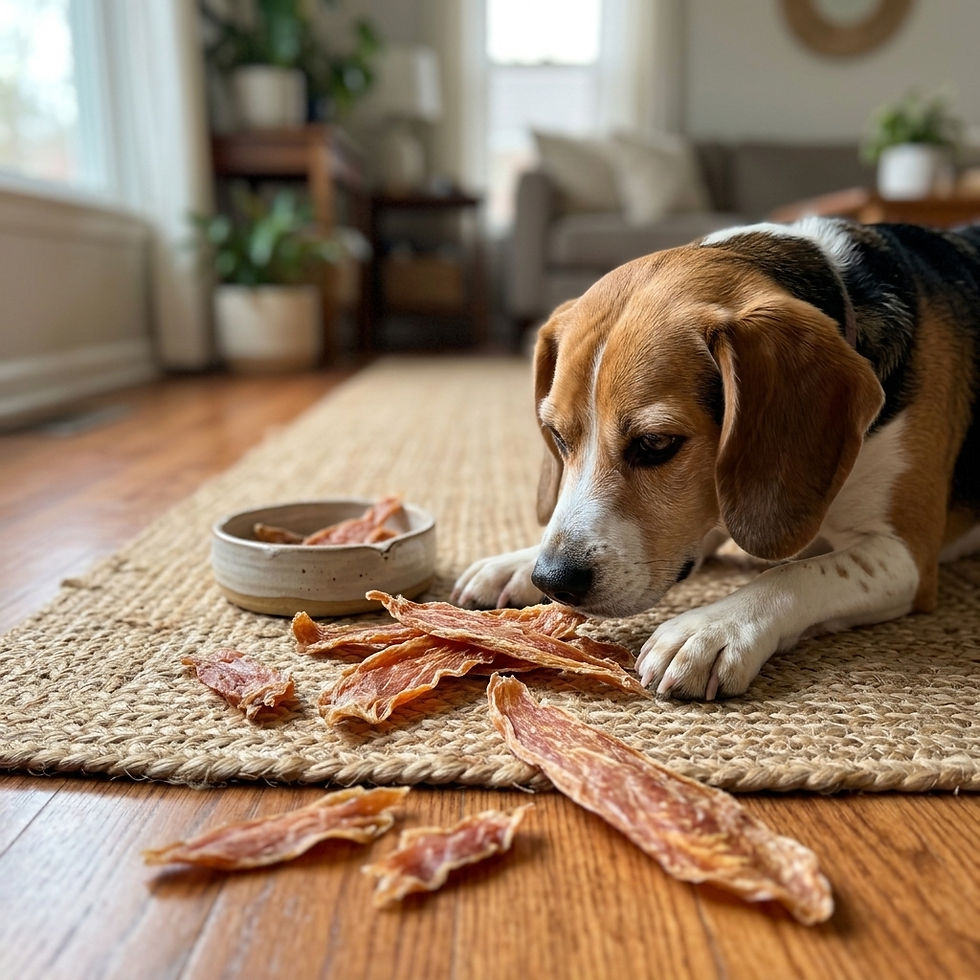
When Oatmeal was a puppy and refusing almost everything we put in front of her, we tried a lot of treats. Cute shaped biscuits. Soft commercial chews. Treats with names that implied they were made of real ingredients. She turned her nose up at most of them. Then we tried dehydrated chicken breast, and she acted like we had been holding out on her the whole time.
I've thought about that reaction a lot since then, and I think there's a real explanation for it, one that goes beyond personal taste. In this case, dogs do actually prefer natural treats over processed.
Why Dogs Go Crazy for Real Meat Treats
A dog's sense of smell is estimated to be somewhere between 10,000 and 100,000 times more sensitive than a human's. That's not a typo. They process scent through a proportionally enormous part of their brain, and it's the primary way they evaluate food before ever tasting it.
This matters because the smell of a treat tells your dog almost everything about what's actually in it. A treat made with real dehydrated chicken breast smells like concentrated chicken, because that's exactly what it is. A treat made with grain base and chicken flavor added afterward smells different. Dogs can tell. Oatmeal and Alfredo can absolutely tell, and every customer video we've gotten shows dogs reacting to JUST CHKN with an enthusiasm that you simply don't get from standard commercial treats.
Can Dogs Tell the Difference Between Natural and Artificial Treats?
The honest answer is: often, yes, and much more reliably than we might expect.
"Natural flavors" is a term you'll see on a lot of commercial treat labels. What it usually means in practice is a flavoring derived from an animal or plant source, but processed and concentrated in a way that bears little resemblance to the original food. Dogs respond to it, but typically with less intensity than to the actual protein source. It's the difference between a meal that smells like your kitchen and a meal that smells like a restaurant three blocks away. Both trigger appetite, but one is more immediate and compelling.
There's also the texture piece. Natural dehydrated meat treats have a specific texture, firmness, and mouthfeel that processed treats with binders and fillers don't replicate. Dogs use their mouths to continue evaluating food after the nose has made its first assessment. A treat that feels like real dried meat is processed differently than one that feels like a pressed biscuit.
Why Does My Dog Ignore Store-Bought Treats?
If your dog seems indifferent to the treats you're offering, it's not necessarily that your dog is broken or unusually picky. It may just be that the treats you've tried aren't compelling enough to compete with whatever else has their attention.
This comes up a lot in training contexts. A dog that ignores treats at home may suddenly be unresponsive to those same treats at the dog park, not because they've forgotten their training, but because the treat isn't valuable enough to compete with the distraction environment. Switching to a higher-value real food treat often changes the picture entirely.
Oatmeal's pickiness as a puppy turned out to be one of the best things that happened to JUST CHKN. She was essentially telling us, very clearly, that she knew the difference between real food and everything else. We just had to listen.
Real Food Treats Dogs Love Most
Based on everything we've observed and what customers consistently report, the treats that generate the strongest reactions are real single-protein meat treats: chicken, beef, salmon, duck. The pattern holds across breeds and sizes. The dogs that are "impossible to motivate with treats" almost universally have not tried a high-quality single-ingredient meat option.
Our full product lineup is built entirely on this premise. Every treat is one real ingredient, made fresh after you order. No flavoring, no filler, no gap between what the label says and what's actually in the bag. If your dog isn't responding to it, that would genuinely surprise us.
The Takeaway for Treat Buying
You don't need to take our word for it. The next time you're evaluating a new treat for your dog, pay attention to their first reaction before they even taste it. Watch their nose. Watch whether they're engaged and eager or vaguely interested. That initial response is your dog's honest assessment of what they're smelling, and it's a more reliable guide than any marketing copy on the front of the bag.
If you've been having trouble finding treats your dog gets excited about, our post on treats for picky eaters covers what we learned from years of dealing with exactly that problem.


Comments