


Human Food as Dog Training Treats: Smart Move or Bad Habit?

Using human food as dog training treats is one of those practices that feels intuitive and works surprisingly well, right up until it doesn't. Hot dogs are probably the most common example: inexpensive, smelly, easy to cut into small pieces, and dogs tend to lose their minds for them. Rotisserie chicken is another one. Cheese. Pieces of cooked steak. These things are highly motivating for most dogs, and motivation is the whole game in treat-based training.
But there are real questions worth asking before you reach for the deli drawer. What are you actually feeding your dog when you train with hot dogs? Are the sodium levels a concern if you are using them in high repetition? Is rotisserie chicken safe, or are there preparation issues to think about? And is there a point where the convenience of human food trades off against something you would rather not compromise on? We have thought through all of these questions, and the answers are more nuanced than most training advice suggests.
Why Human Food Works So Well as a Training Reward
The reason human food tends to outperform most commercial treats as a training reward is smell. Dogs navigate the world primarily through scent, and their olfactory system is estimated to be tens of thousands of times more sensitive than a human's. Human food, especially protein-rich foods like meat and cheese, produces an intense aromatic signal that most commercial treats cannot replicate because commercial treats are often cooked at high temperatures, stored for long periods, and contain diluting ingredients that mute the protein scent.
When you pull out a piece of rotisserie chicken in a distracting environment, your dog's nose picks up something unmistakably real and immediately appealing. That is exactly the condition under which high-value treats earn their name: when competing stimuli are strong, the reward has to be stronger. Human food often wins that competition.
The other factor is novelty. Most dogs have not built up the same associations with human food that they have with their usual treat bag. A treat they get every day for training becomes predictable. A piece of actual chicken breast from last night's dinner is unexpected and therefore more exciting, at least until it also becomes a training staple.

The Most Common Human Foods Used as Dog Training Treats
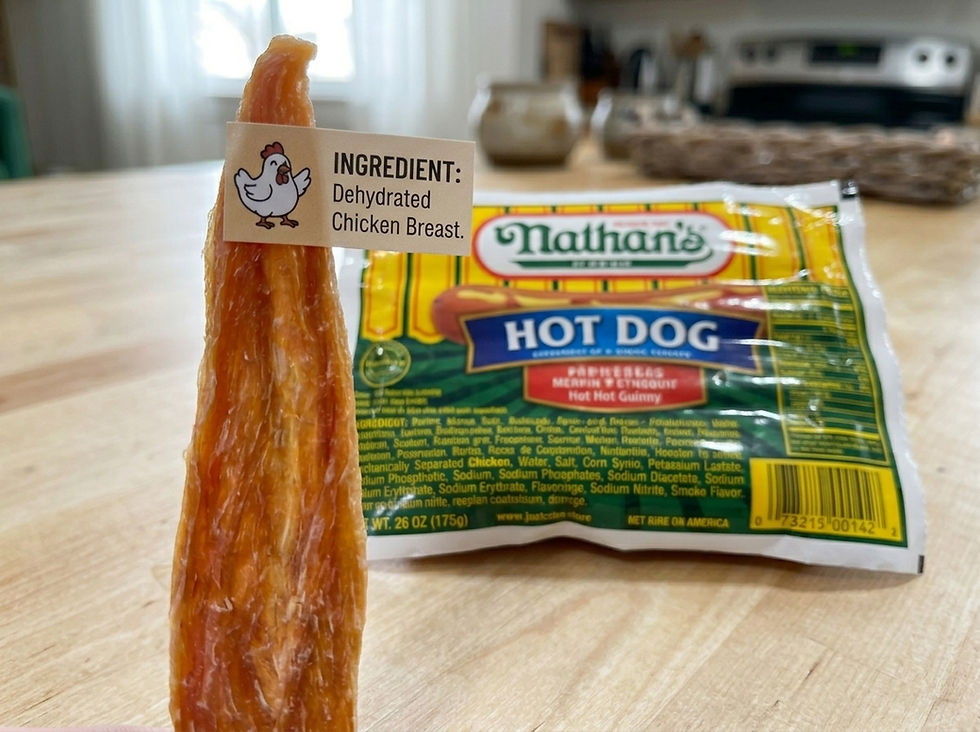
Hot dogs are probably the most popular training treat among professional trainers who use human food. They are cheap, consistent, extremely smelly, and easy to prep: slice into thin coins or small cubes and you have a session's worth of treats in two minutes. The concern is the ingredient list. A standard hot dog contains a significant amount of sodium, often 400 to 600mg per link, plus preservatives like sodium nitrite, added flavorings, and sometimes ingredients derived from allergen-prone sources. For a short training session where you are using a dozen small pieces, the actual intake is modest. For intensive daily training with large quantities, the sodium load is worth thinking about, especially for smaller dogs.
Cheese is another trainer favorite, particularly for dogs who are not as protein-drive as meat-motivated dogs. String cheese and cheddar cut into small cubes are easy to handle and strongly aromatic. Cheese is high in fat, which makes it calorie-dense and means the same satiation caution applies as with any rich treat: use small pieces and count it against the day's caloric budget. Some dogs are lactose intolerant and will have digestive issues with cheese even in small quantities, so watch for that if you are introducing it as a training reward.
Cooked chicken breast is about as clean as human food gets as a training option. Plain, unseasoned, cooked chicken breast has a single protein source, no additives, and dogs respond to it almost universally. This is actually the starting point for what we do at JUST CHKN: take that same logic, dehydrate it to a safe moisture level, and make it shelf-stable so it is actually practical for everyday training rather than something you have to prep fresh every day.
Rotisserie chicken is popular for the same reason as plain chicken, but with a caveat. Store-bought rotisserie chicken is typically seasoned with salt, garlic, onion powder, and other spices, some of which are toxic to dogs in sufficient quantities. Garlic and onion, even in powder form, can cause oxidative damage to red blood cells in dogs. The amount on a small piece of rotisserie chicken skin is probably not acutely dangerous for a large dog, but it is not something to use as a daily training treat, especially for small dogs or in large quantities. If you want the motivational power of real chicken without the seasoning concern, plain cooked breast or a purpose-made single ingredient treat is a cleaner option.
Deli meats follow a similar logic to hot dogs. Turkey and chicken deli slices can work well, but they are typically high in sodium and often contain preservatives. Low-sodium versions exist and are a better choice if you are using these regularly. Read the label the same way you would a dog treat label.

What to Actually Watch Out For
The safety questions around human food as training treats are real but manageable if you know what to avoid.
Sodium is the most consistent concern across the popular options. Dogs have lower sodium tolerances than humans, and while a single training session using a modest amount of human food is unlikely to cause a problem for a healthy adult dog, daily high-sodium training treats add up. For smaller breeds, the math gets tighter faster. If you are training intensively and reaching for hot dogs or deli meat daily, it is worth either rotating in lower-sodium options or switching to a treat without added salt.
Toxic ingredients are the hard line. Garlic, onion, xylitol (found in some peanut butters and sugar-free products), grapes, raisins, macadamia nuts, chocolate, and avocado are all genuinely dangerous for dogs and should never appear in a training treat. With whole human foods this is mostly a matter of knowing what you are giving them. With processed human foods, reading the ingredient list briefly before using it is a good habit.
Fat content affects both health and training. High-fat treats, given in volume during an intensive training session, can contribute to digestive upset in dogs who are sensitive to fat. Pancreatitis, an inflammation of the pancreas that can range from mild to severe, has been associated with high-fat meals in dogs. A few small pieces of cheese is unlikely to be an issue. Half a hot dog per session every day for a week is a more meaningful fat load, particularly for breeds predisposed to pancreatitis.
Preparation method matters with cooked meats. Boiled or baked plain chicken is fine. Chicken that has been cooked with butter, oil, garlic, or seasoning is not. If you are cooking specifically to use as a training treat, keep it completely plain.
The Real Tradeoff: Convenience vs. Consistency
The main practical problem with human food as training treats is that it requires active management. You have to prep it, store it properly, remember to bring it, and track what you have used against your dog's daily caloric allowance. Plain cooked chicken goes bad faster than a dehydrated treat. Cheese needs to stay cool. Hot dogs need refrigeration. None of these are insurmountable, but they add friction to a training routine that is already demanding enough to stick with consistently.
There is also a long-term management question: once your dog learns that training sessions might produce actual rotisserie chicken, their threshold for commercial treats often rises. You have raised the bar, which is great for motivation in the short term and occasionally inconvenient in the long term when you do not have the premium option available. This is worth managing intentionally by mixing human food and purpose-made treats in the same training sessions rather than always using one or the other.
Our post on high-value dog treats for training goes into more detail on how to structure treat value across a training routine, and the principle of rotating treat types to prevent both fatigue and over-dependence on a single reward.
Where Single Ingredient Treats Fit Into This Conversation
The reason single ingredient dehydrated protein treats like JUST CHKN work so well as training rewards is that they get most of the way to what makes human food appealing, with much less management overhead.
Dehydrated chicken breast has the same protein source as plain cooked chicken. The dehydration process concentrates the smell rather than eliminating it. The shelf-stable format means you can keep it in a treat pouch or on a counter without worrying about spoilage. Small pieces break off easily for high-repetition training. And because it is made from one ingredient with no added salt, no preservatives, and no fillers, you know exactly what your dog is getting with every piece.
This is genuinely why we started making treats this way, first at home for Oatmeal and Alfredo, then as the product behind JUST CHKN. We wanted the motivational power of real chicken without having to prep fresh chicken for every training session or worry about whether the hot dogs in the fridge had garlic powder buried in the ingredient list. You can read more about how we got there on our About page.
If you want to use human food in training, plain cooked chicken and low-sodium cheese are the cleanest options. If you want something that behaves like high-value human food but works like a purpose-made treat, a single ingredient dehydrated protein treat is worth keeping in the rotation.

Putting It Together: A Practical Human Food Training Approach
If you want to use human food in your training and want to do it well, here is a straightforward approach.
Reserve truly premium human food, actual rotisserie chicken (unseasoned portions only), or cooked steak, for the hardest situations: a new environment, a behavior your dog has been struggling with, a recall from a serious distraction. The rarity adds to the value.
Use plain cooked chicken breast or low-sodium deli turkey for regular high-value sessions. These are clean, manageable, and strongly motivating without the sodium or fat concerns of hot dogs and cheese.
Use purpose-made single ingredient treats for the bulk of daily training. They are consistent, shelf-stable, easy to portion, and do not require prep. Rotate them with the human food options rather than abandoning them, so your dog's expectations stay flexible.
Keep all treats small. In training, you are rewarding with information as much as with food. The treat signals that the behavior was correct. A piece the size of a pea delivers that signal as effectively as a larger piece, and lets you stay in a session longer before satiation kicks in. Our post on how to use dog treats for positive reinforcement training goes deeper on session structure and how treat size plays into it.
Training with real food is one of the things that good trainers have been doing for decades, and it works. The key is knowing what you are using, why it works, and where the limits are. Within those parameters, a little bit of plain chicken goes a long way.


Comments